Color Services Offered
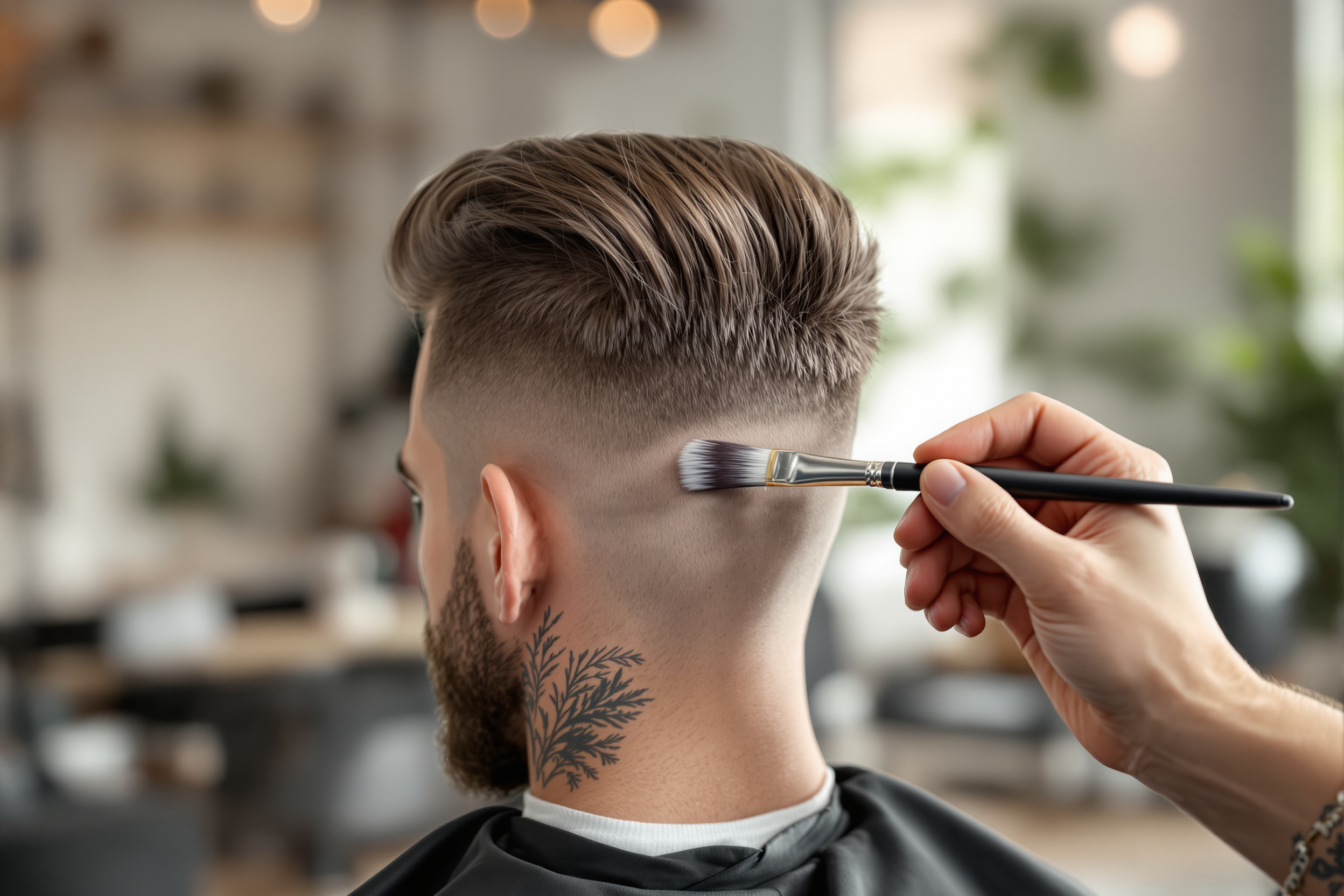
- Full Color (All-Over Dye) — uniform color across the whole head, useful for covering gray, going darker, or making a bigger change. Single process, applied with a brush and processed for the right amount of time.
- Highlights — strands of lighter color woven through the existing hair to add dimension. Subtle when done right, dramatic when you want it.
- Lowlights — the opposite of highlights. Darker strands woven in to add depth, especially helpful for hair that has lost contrast over time.
- Gray Blending — instead of covering all the gray, we soften the contrast. The result is younger-looking hair that still reads as natural. Great for men who do not want to commit to ongoing root touch-ups.
- Color Refresh — for clients who already color, a quick midway touch-up between full services to keep the tone consistent.
- Beard Color — yes, you can color a beard. Useful for matching a colored head of hair, or for evening out patchy gray.
The Process
Color work takes longer than a haircut. Plan on 60-90 minutes for highlights or a full color. The basic flow:
- Consultation — we talk through what you want, look at reference photos, and assess your starting color, hair texture, and any existing dye in the hair.
- Patch Test (for new clients) — we recommend a small test 48 hours before your appointment if you have never colored before, or if you have known sensitivities. The FDA guidance on hair dyes advises a patch test on the skin every time before dyeing, and notes that a reaction is still possible even when a skin test shows none.
- Application — color is mixed fresh, applied in sections, and timed precisely. We use professional-grade product, not box dye.
- Processing — color processes for the appropriate window. We check during processing to confirm it is developing evenly.
- Rinse and Tone — we rinse thoroughly, often apply a toner to fine-tune the final shade, and condition deeply.
- Cut and Style — many clients combine color with a haircut so you walk out finished, not just colored.
Maintenance and Care
Color is an investment, and it lasts longer when you take care of it.
- Wait 48 hours before the first wash. Color needs time to settle into the cuticle.
- Use color-safe shampoo. Sulfate-free formulas are gentler and slow fade.
- Cool water on rinse. Hot water opens the cuticle and accelerates fade.
- Skip daily washing if you can. Every other day or every third day is better for colored hair.
- Protect from UV. Hats help, especially during San Ramon's bright summer months.
- Deep condition weekly. Color processes can dry the hair — a weekly mask keeps it healthy.
Is It Right For You?
Hair color is not just a cosmetic decision — it is a chemical service, and your hair's history matters. Some honest considerations:
- If your hair has been bleached or chemically treated in the last 6 months, we may recommend a lower-impact option. Stacking chemical services can compromise hair health.
- If you have sensitive skin, mention it during consultation. We will discuss alternatives, including ammonia-free formulations.
- If you are early in the graying process, gray blending is almost always a better first step than full color. It looks more natural and is much easier to maintain.
- If you have never colored before, we usually recommend starting subtle. You can always go bolder; it is harder to go back.
The American Academy of Dermatology publishes solid general guidance on coloring and perming hair, including signs of an allergic reaction to watch for. We are happy to walk through their recommendations during your consultation.
The American Academy of Dermatology explains that gray hair appears when follicles stop making melanin, the substance that gives hair its color. Its guide to the causes of gray hair treats graying as a normal part of aging. Keeping it visible is a valid choice; covering it is a preference, not a requirement.
Safety still matters with subtle color. The FDA advises a skin patch test before every use, including after years of trouble-free dyeing. A test without a reaction does not guarantee that dyeing will cause none. Follow the product directions, and do not dye an irritated, sunburned or damaged scalp. The FDA also advises waiting at least 14 days after bleaching or relaxing before using dye. Our going-gray guide compares blending, full color and letting it show.
Ready to Try a New Color?
Color is one of the most rewarding services we offer when it is done right — and it can be one of the most damaging when it is rushed. Book a consultation so we can plan the cut and color together. Get in touch to schedule, or explore our haircut services if you want to combine the two.